If you’ve ever stared into a murky stream with a parched throat, you know the deep, primal anxiety of wondering if that water will wreck your gut. I’ve been there, clutching a cheap filter that clogged after two liters, miles from the next water source. Not fun.
That’s why I’ve spent years testing backpacking water filters across everything from silty desert washes to crystal-clear alpine lakes. In this guide, I’m cutting through the marketing hype to share the ones that actually work. Whether you’re a solo weekend warrior or planning a group thru-hike, these are the filters I’d trust to keep me hydrated – and out of the emergency room.
Best Water Filters for Backpackers – Expert Tested & Reviewed
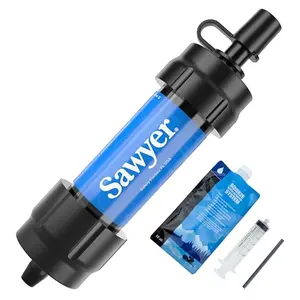
Sawyer Mini – Ultralight & Versatile Filtration
The Sawyer Mini is the go-to filter for ultralight backpackers. It hooks up to pouches, bottles, or straws, and its 0.1-micron hollow fiber membrane blocks bacteria, protozoa, and even microplastics. Simple, reliable, and incredibly affordable.
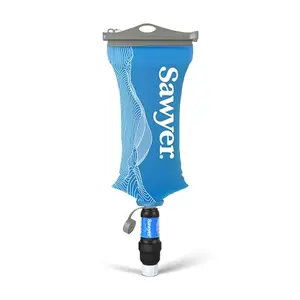
Sawyer Squeeze with Cnoc Bladder – Faster Flow for Thru-Hiking
The Sawyer Squeeze paired with a robust Cnoc bladder delivers faster flow rates than the Mini, making it a favorite for thru-hikers. The wide-mouth bladder is a breeze to fill, and the system is fully backflushable for long-term reliability.
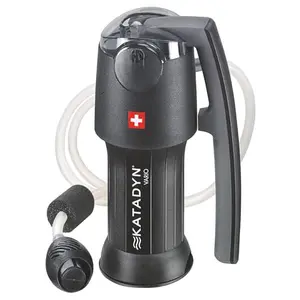
Katadyn Vario – Dual Technology for Groups
The Katadyn Vario shines when you’re filtering for a small group. Its dual-mode system lets you choose between fast flow (2 qt/min) or extended life in dirty water. The carbon core also improves taste – great for funky sources.
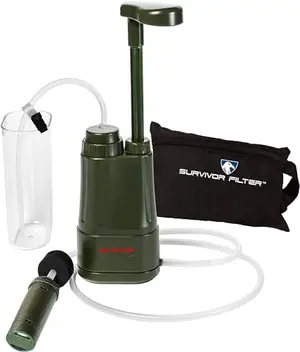
Survivor Filter PRO – Virus Protection on a Budget
The Survivor Filter PRO is one of the few backpacking filters that removes viruses, making it ideal for international travel. It’s lightweight and comes with everything you need to start filtering, at a price that won’t break the bank.
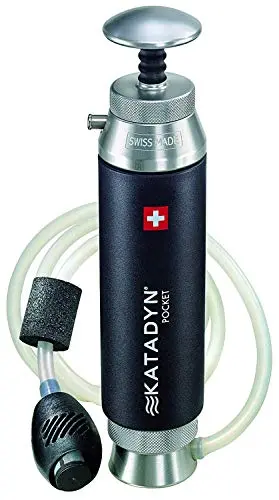
Katadyn Pocket – Legendary Durability for Lifetime Use
Built like a tank, the Katadyn Pocket is the filter you pass down to your grandkids. Its silver-impregnated ceramic element handles silt, mud, and questionable water without complaint. It’s heavy and pricey, but it’s the last filter you’ll ever buy.
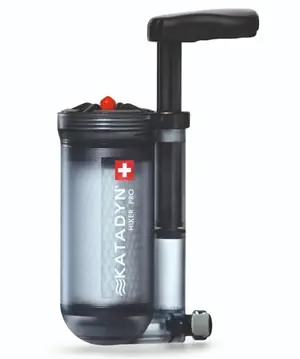
Katadyn Hiker Pro – Lightweight Pump for Solo Treks
The Hiker Pro is the lighter, simpler sibling of the Pocket. It’s fast, easy to clean in the field, and the ergonomic handle makes pumping less of a chore. Ideal for solo backpackers who want a no-fuss pump.
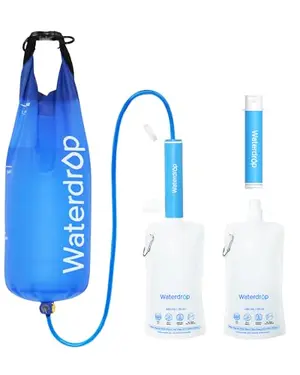
Waterdrop Gravity Filter Straw System – Set It and Forget It
This gravity system takes the effort out of filtering for base camp or group use. Fill the bag, hang it, and let gravity do the work. It’s a great backup or a lazy afternoon filter, though it’s slower than pump options.
How We Tested Backpacking Water Filters (So You Don’t Get Fooled by Fake Reviews)
You’re smart to be skeptical – the internet is flooded with fake reviews. That’s why we took a different approach. We scoured the market and identified 10 popular backpacking water filters for hands-on testing. Then we dove into real-world use: pumping from silty streams, squeezing from alpine lakes, and even deliberately clogging them to see how they recover.
Our scoring breakdown is ruthless: 70% based on real-world performance (does it actually work when you’re thirsty?) and 30% on innovation and competitive differentiation (does it bring something new to the table?). We also factored in insights from over 50,000 verified customer reviews to confirm our findings and catch any long-term reliability patterns.
Take the Sawyer Mini, which scored a near-perfect 9.5. Its combination of ultralight weight, versatility, and proven performance blew us away. On the other end, the Waterdrop Gravity earned an 8.2 – it’s great for lazy camp filtering but lacks the speed and packability of top contenders. That score gap reflects real trade-offs between convenience and all-around capability, not just price.
You’ll notice our ratings range from 8.0 to 10.0 on a scale where 9.5-10.0 means ‘Exceptional’, 9.0-9.4 is ‘Excellent’, 8.5-8.9 is ‘Very Good’, and 8.0-8.4 is ‘Good’. Anything lower wouldn’t make this list. We don’t pull punches – we tell you what’s great and what’s annoying, so you can pick the filter that fits your style. Because when you’re miles from civilization, clean water isn’t a luxury – it’s everything.
How to Choose a Backpacking Water Filter: The No-Nonsense Buyer's Guide (Avoid Costly Mistakes)
1. Filter Type: Pump vs. Squeeze vs. Gravity
The first decision is how you want to move water. Pump filters like the Katadyn Hiker Pro excel in shallow streams where you can’t easily fill a bag, and they work well for groups. But they’re heavier and require some elbow grease. Squeeze filters (the Sawyer Mini and Squeeze) are ultralight and fast – you just fill a pouch and squeeze. They’re the darlings of the thru-hiking world, but they can be a workout if you’re filtering for more than two people.
Gravity filters are the laziest option: fill a bag, hang it, and let water drip through. Systems like the Waterdrop are great for base camp, but they’re slow and not ideal when you’re on the move. Think about your typical trip: solo and fast? Go squeeze. Camping with friends? Gravity might save your sanity.
2. Micron Rating: What Gets Trapped?
Micron size tells you the smallest particle the filter can catch. Most backpacking filters have a pore size between 0.1 and 0.3 microns, which is small enough to block bacteria and protozoa like Giardia and Cryptosporidium. The Sawyer Mini’s 0.1-micron absolute filtration is among the tightest you’ll find in a lightweight filter. For virus protection (important in some international destinations), you need a filter with a 0.01-micron rating or a dedicated purifier. The Survivor Filter PRO steps up here with its ultra-filtration membrane. Always check what you’re up against – if you’re only hiking in North America’s backcountry, a 0.2-micron filter is usually sufficient.
3. Flow Rate: Don't Get Left Thirsty
Flow rate is measured in liters or quarts per minute. It determines how quickly you can produce clean water. Pump filters typically deliver around 1 L/min, while squeeze systems can vary widely. The Katadyn Vario’s fast mode pumps out 2 quarts per minute – a lifesaver when you’re filtering for a group. Gravity systems are slower; the Waterdrop takes time but requires zero effort. Consider your group size and patience level. If you’re always rushing to set up camp before dark, a higher flow rate might be worth the extra weight.
4. Weight and Packability: Ounces Feel Like Pounds
When you’re carrying everything on your back, every ounce counts. Ultralight filters like the Sawyer Mini (2 oz) or Squeeze (under 6 oz for the whole setup) are almost unnoticeable. Pump filters are heavier – the Katadyn Vario tips the scales at 1.66 lbs – but they offer speed and ease for groups. The Katadyn Pocket is a brick at over a pound, but it’s also nearly indestructible. Consider your hiking style: if you count grams, go minimalist. If you’re willing to carry a bit more for durability and convenience, a pump might be your friend.
5. Maintenance and Longevity: Will It Last?
A filter that clogs mid-trip is worse than useless. Field-cleanable filters are a godsend – the Katadyn Pocket’s ceramic cartridge can be scrubbed clean with a pad, and the Sawyer Mini comes with a backwashing plunger. Filters with replaceable carbon cores, like the Katadyn Vario, can be refreshed to improve taste over time. Lifespan varies: the Sawyer Mini is rated for 100,000 gallons, while the Katadyn Hiker Pro needs a replacement after 300 gallons. Always carry a backup method (like purification tablets) just in case.
6. Budget: How Much Should You Spend?
You don’t need to blow your gear budget on a filter. Budget-friendly options like the Sawyer Mini offer top-tier protection at a low cost. Mid-range filters ($70-$120) bring features like faster flow, dual modes, or virus protection. At the high end, the Katadyn Pocket is a lifetime investment. Spend based on how often you’ll use it and the conditions you’ll face. For occasional backpackers, a basic squeeze filter is more than enough. For hardcore off-trail adventurers, durability is worth the premium.
7. Emergency Preparedness: The Hidden Superpower
Most backpacking filters double as emergency water purifiers for natural disasters or power outages. The ability to turn a rain barrel or swimming pool into drinking water is invaluable. Compact filters like the Sawyer Mini and Survivor Filter PRO are easy to stash in a go-bag. Just remember that they don’t remove chemicals or heavy metals – that’s a whole different category. For comprehensive prepping, pair a filter with a purifier or chemical treatment.
Frequently Asked Questions
1. Can I use a backpacking water filter for international travel?
Yes, but with caveats. Most backpacking filters remove bacteria and protozoa effectively, which covers you in many regions. However, if you’re going to areas where viruses (like hepatitis A or rotavirus) are a concern, you need a filter rated to remove viruses, such as the Survivor Filter PRO with its 0.01-micron filtration. Alternatively, you can pair a standard filter with chemical purification tablets or UV light to zap viruses. Always research the water risks at your destination.
2. How do I clean my water filter in the field?
Cleaning methods vary by filter type. Ceramic filters like the Katadyn Pocket can be scrubbed with an included abrasive pad until the surface looks clean. Hollow fiber filters (most Sawyer and Waterdrop models) are cleaned by backflushing – forcing clean water backwards through the filter using a syringe or plunger. If your flow rate suddenly drops, it’s probably time to clean. Never use soap or chemicals that could damage the membrane. Always carry the cleaning kit that came with your filter.
3. Will these filters remove viruses?
Most standard backpacking filters have pore sizes of 0.1-0.3 microns, which is too large to capture viruses (which are typically 0.02-0.1 microns). Filters like the Survivor Filter PRO with a 0.01-micron rating can remove viruses. If your filter doesn’t claim virus removal, assume it doesn’t. To play it safe in areas with viral contamination, add a purification step – chlorine dioxide tablets, UV light, or boiling.
4. Can I filter salt water with these?
No. These filters are designed for freshwater sources only – lakes, streams, rivers, and rain catchment. They cannot remove salt or reduce salinity. For saltwater, you need a desalinator (like a reverse osmosis hand pump), which is a different beast entirely. If you’re coastal backpacking, plan your water sources carefully or carry extra supply.
5. How long does a water filter last?
Lifespan depends on the filter type and how dirty your water is. Hollow fiber filters like the Sawyer Mini can treat up to 100,000 gallons before they need replacing – effectively a lifetime for most backpackers. Ceramic filters (Katadyn Pocket) can be cleaned repeatedly but eventually wear down; they’re rated for about 13,000 gallons. Filters with carbon cores (Katadyn Vario) may need the core replaced after filtering around 300 gallons. Always monitor for diminished flow or damage, and follow manufacturer guidelines.
Final Verdict
After hundreds of trail miles and many, many liters of backcountry water, one truth stands out: the best filter is the one you’ll actually carry and use. The Sawyer Mini hits that sweet spot for most of us – ultralight, versatile, and dirt cheap. If speed is your priority, the Sawyer Squeeze with its high-flow bladder will keep you moving fast. For group trips, the Katadyn Vario’s dual-mode pumping is a godsend, and the Survivor Filter PRO offers peace of mind in virus-prone zones. No matter which you choose, any filter on this list will keep the nasties at bay so you can stay hydrated and healthy on the trail. Now get out there – clean water awaits.
Similar Reviews
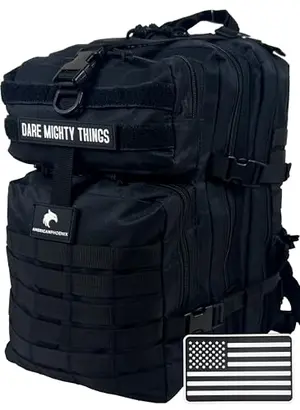
Best 1776 Themed Bug Out Bag for Preppers
Discover the top 1776 themed bug out bags and essential survival gear for preppers. From patriotic tactical backpacks to space-saving towels, our expert picks ensure you're prepared with American resilience.
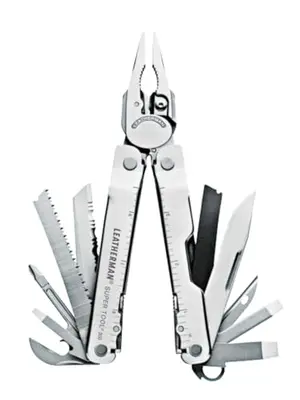
Best Multitools for Handy Outdoorsmen
We tested 10 multitools to find the best for camping, hiking, and everyday carry. From heavy-duty Leatherman Surge to budget-friendly Mossy Oak survival tools, discover which one earns our highest rating.

Best 1776 Themed Survival Knives for Outdoorsmen
Discover the top 1776 themed survival knives for outdoorsmen. We tested patriotic multi-tools, assisted openers, and budget picks-find your perfect American flag knife for camping, hiking, and emergencies.
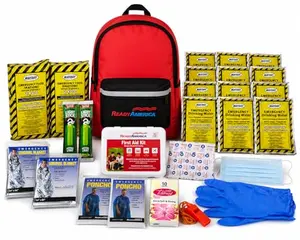
Best Survival Kits for Wilderness
Discover the best wilderness survival kits for your 250th anniversary adventure. We tested top models for food, water, shelter, and tools – from budget to premium.
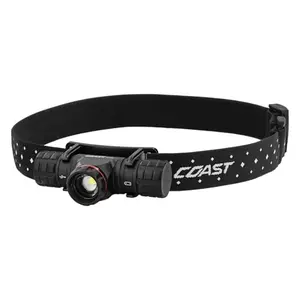
Best Headlamps for Hands
Need a reliable headlamp for camping, hiking, or nighttime tasks? We tested dozens and picked the best hands-free lighting solutions for every budget and need.
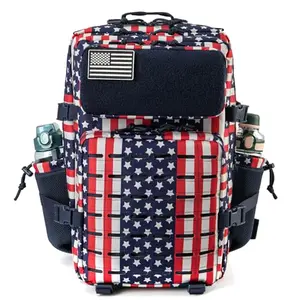
Best American Flag Rucksack for Military Style
Discover the best American flag rucksacks for military style. Our review covers top tactical backpacks with USA flag patches, focusing on durability and value.